

Helpful resources
What does being an ‘Integrative Therapist’ even mean?
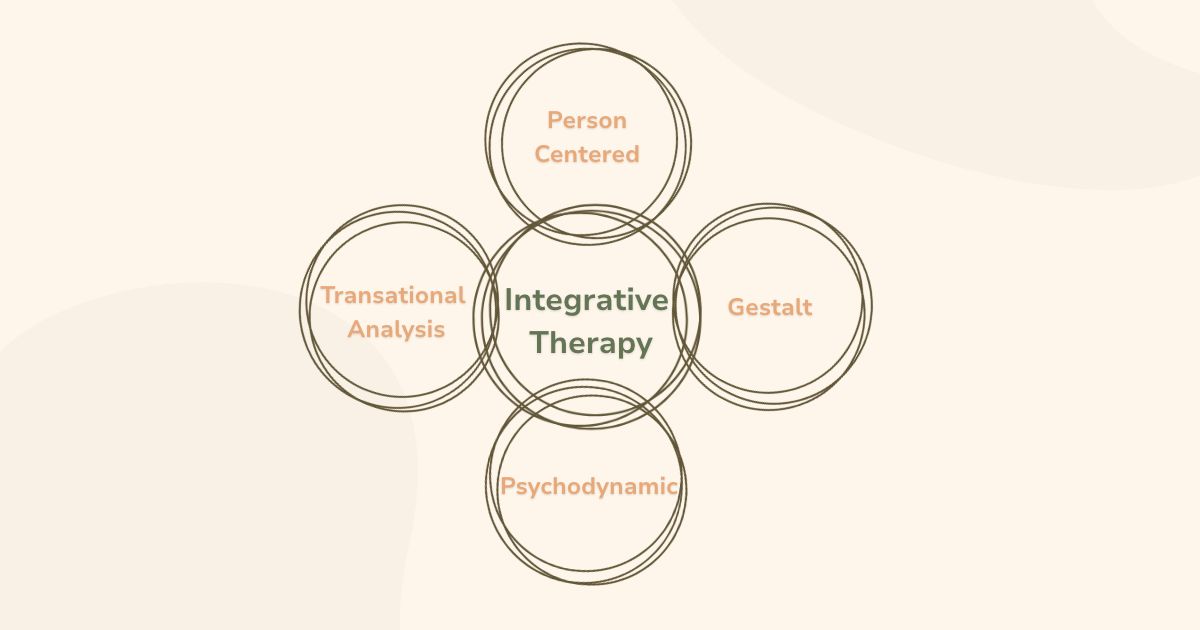
When searching for a new therapist there is so much jargon to wade through, different modalities, training styles, specialities, governing bodies?! The list is endless. That being said, it’s great that we live in a world where therapists’ approaches and trainings are so varied, as it gives clients the ability to select a therapist they feel is perfect for them. However in this post, I’ll be focusing on what being an ‘Integrative Therapist‘ means and explaining some of the other well-known modalities to help as a bit of a jargon buster.
As you will see on my website I am a Integrative Therapist and you may be thinking, what does being an ‘Integrative Therapist’ even mean? The way I describe being an Integrative therapist is that I am able to draw on a number of different modalities. All clients have different presenting problems, emotional needs, and ways of communicating, so I don’t believe in a one-size-fits-all approach. What might work for one client might be completely unsuitable for another one. Psychology Today define’s Integrative therapy as ‘an individualized, holistic approach to therapy that combines ideas and techniques from different therapeutic schools of thought depending on the unique needs of a given client.’. I really like this description and the use of the word holistic I feel is knocks the nail on the head – I consider the whole persons needs from a mental, physical and emotional perspective. Integrative Therapy can also be described as a therapeutic partnership and this approach tends to be more inclusive of the client in comparison to some of the traditional forms of talking therapy.
In practice, I am able to merge elements from different psychological theories to be more flexible. The main modalities I use are; Person-Centered, Gestalt, Psychodynamic and Transactional Analysis. I often like to introduce creative and somatic elements and I often offer the option to draw, work with objects, role playing, movement, or tuning into physical sensations to help process emotions.
To give some further insight to the modalities I have mentioned I draw on;
Person-centered Therapy
Founded in the 1940s by American psychologist Carl Rogers. His belief was that given the right conditions, a person can reach their full potential and become their true self. This approach can be described as ‘non-directive’ therapy which means the client leads the direction and pace of the sessions. The therapist’s role is to provide the client space for self-exploration resulting in a clearer perception of themselves, leading to ‘psychological growth’. Yao and Kabir (2023)
Gestalt Therapy
Gestalt therapy is a therapy that focuses on the here and now experience – the BACP explains it ‘it looks at how your past affects and influences how you’re feeling in this moment rather than how you felt back then’. There is no set way of implementing Gestalt therapy but it can often involve physical movement, drawing or using objects in the room. A favoured approach of mine is the Empty Chair method – an incredibly immersive technique to explore conflicts within yourself.
Psychodynamic Therapy
This approach means looking at how your unconscious mind and childhood experiences shape your current behaviour, feelings and relationships. I find clients are often a bit wary when they hear about Psychodynamic theories, based on it being rooted in Freud’s occasionally ‘far out’ approach. Although psychodynamic approaches have expanded beyond Freud—and frameworks like Bowlby and Ainsworth’s Attachment Theory and Melanie Klein’s Object Relations Theory, although they date back to the mid-20th century—they remain empirically supported and useful for understanding common behaviours and emotional struggles.
Transactional Analysis (TA)
Another favoured approach of mine, founded by Eric Berne in the late 1950s is TA. To name just one, a useful TA concept is the understanding that each person has three ego-states; parent, adult and child. Insights from this model can help to identify how clients communicate and interact within relationships. This model is helpful to better understand relationship issues and can encourage clients to address problems and implement change. It is said that Berne believed “We all have the capacity to decide what we want for our lives, and TA can help us to recognise our worth and value, and achieve these goals.”.
Hopefully, this has helped explain some of the therapy jargon and given you a clearer picture of what working with an integrative therapist actually looks like. What matters most is finding a space where you feel heard, safe, and understood.
If you’re curious about how an integrative approach could support you, feel free to get in touch for a chat—I’d love to hear from you. Feel free to enquire to book a free, no-obligation 20-minute online consultation to share what brings you here, ask questions and explore how we might work together.
Meet Emily
Emily McDonald is an Integrative Psychotherapist offering online and in-person therapy, and group grief walks in Walthamstow. Her approach is warm, collaborative and trauma-informed.
More about Emily